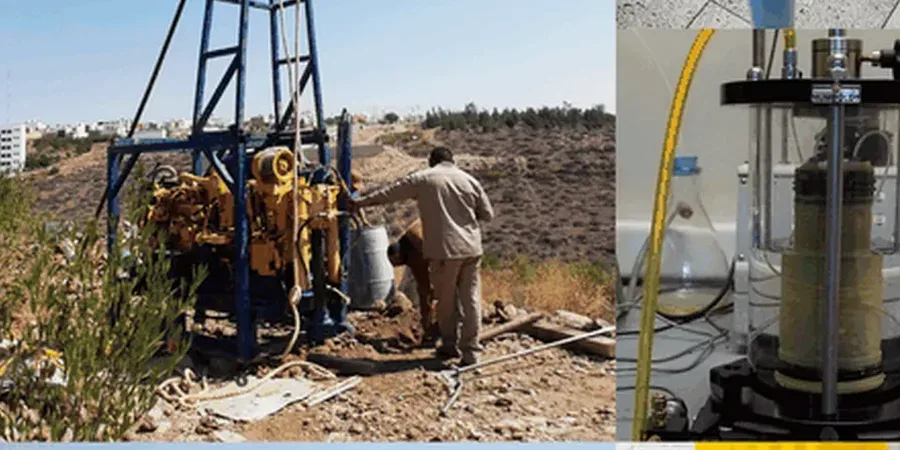
The crew usually rolls up to the site in Spokane with a Diedrich D-50 drill rig—nothing too flashy, but it gets the job done in the basalt cobbles and glacial silts we see all over town. You’re sitting at 1,800 feet elevation, where the Spokane River carved through the Columbia Plateau and left a mix of fill, loess, and clay lenses that make every lot a bit different. We pull Shelby tubes and split-spoon samples right there on the spot, then run them through our lab for a complete soil mechanics study. While the drill is turning, we might send a crew a few blocks over for plate-load testing if the foundation design calls for direct bearing verification. The goal is always the same: give the structural engineer real numbers, not textbook assumptions.
Spokane soils can shift from gravel to clay in less than five vertical feet—your lab data has to match the reality in the split-spoon, or the numbers mean nothing.
How we work
Local ground factors
The most common mistake we see contractors make around Spokane is assuming the basalt is solid rock everywhere. It’s not—much of the near-surface basalt in the valley is blocky and weathered, with open joints that act as drains or collapse zones. We’ve had projects in the West Central neighborhood where a footing poured on “rock” ended up bridging a void and cracking within two years. A proper soil mechanics study catches those gaps because we log every run and correlate the blow counts with the core condition. Skipping the lab phase is another trap: you might hit gravel at 10 feet and think you’re good, but if the fines content is above 15%, you could trigger liquefaction under seismic loading—Spokane sits in IBC Seismic Design Category C and has felt shaking from the 2001 Nisqually quake 280 miles away. The lab data protects you from that liability.
Applicable standards
ASTM D1586: Standard Test Method for Standard Penetration Test (SPT), ASTM D2487: Standard Practice for Classification of Soils for Engineering Purposes (USCS), ASTM D4318: Standard Test Methods for Liquid Limit, Plastic Limit, and Plasticity Index, ASTM D4767: Standard Test Method for Consolidated Undrained Triaxial Compression, IBC Chapter 18: Soils and Foundations, Seismic Site Class Determination
Associated technical services
Geotechnical Lab Testing Suite
Our Spokane lab runs triaxial (CU and UU), direct shear, consolidation, Atterberg limits, and full particle-size distributions under ASTM standards. We process samples within 24 hours of drilling to keep moisture content accurate—critical for the silts around the Spokane Valley aquifer.
Drilling, Sampling, and Field Logging
We mobilize track-mounted and truck-mounted rigs across Spokane County, from the basalt outcrops on the north side to the river-bottom silts downtown. Continuous SPT sampling, Shelby tubes, and bulk sampling with chain-of-custody documentation as standard.
Typical parameters
Quick answers
How much does a soil mechanics study cost in Spokane?
For a typical residential or light commercial project in the Spokane area, you’re looking at a range of US$3.490 to US$4.880. That usually covers the drill crew, a couple of borings down to 15 or 20 feet, SPT sampling, and the full lab suite—triaxial, Atterberg limits, grain size, and a signed report. If you need deeper borings or specialty tests like consolidation, the price adjusts, but we’ll walk you through the scope before we mobilize.
How deep do you usually drill for a soil mechanics study in Spokane?
It depends on the foundation load and the neighborhood, but most of our Spokane borings go 15 to 30 feet deep. On the South Hill, where the loess can run thick, we often extend to 25 feet to get below the zone of seasonal moisture change. Downtown, you might hit basalt at 10 feet and we log refusal. We follow IBC Chapter 18 guidelines for boring depth relative to footing width and load intensity.
What’s the difference between a soil mechanics study and a standard geotech report?
A standard geotech report might just give you a bearing capacity and some general recommendations. A soil mechanics study goes deeper—literally and analytically. We’re running triaxial compression, consolidation, and Atterberg limits in the lab, not just classifying the soil. That means you get effective stress parameters for slope stability or retaining wall design, not just presumptive values. In Spokane, where the glacial lake deposits and basalt interfaces create complex layering, that extra lab data makes a real difference for the structural engineer.
How long does a soil mechanics study take from drilling to final report?
For most Spokane projects, you’ll have the final report in 7 to 10 business days after drilling. We run the lab tests within the first 48 hours—consolidation takes the longest because we have to let the sample sit under load for a full cycle. If you’re on a tight timeline, we can fast-track the report and deliver preliminary recommendations in 3 to 4 days, but the full lab data set takes the time it takes—we won’t cut corners on the triaxial.