The Spokane Valley is underlain by significant deposits of soft alluvium and glacial lake sediments. When we put down a CPT rig near the Spokane River, refusal comes late—often 50 or 60 feet down before we hit anything competent. That means bearing capacity is a problem. Traditional over-excavation is expensive here. Hauling off thousands of yards of saturated silt and replacing them with structural fill blows up budgets fast. Stone column design offers a direct alternative. It reinforces the soft matrix in place. We model the composite shear strength, check settlement against IBC limits, and size the columns for the structure's load. The design ties back to site-specific stratigraphy from the CPT test data. No guesswork. Just a clear path to a workable foundation where none existed before.
A stone column isn't a pile—it's a soil reinforcement element that makes the ground itself part of the foundation system.
How we work
Local ground factors
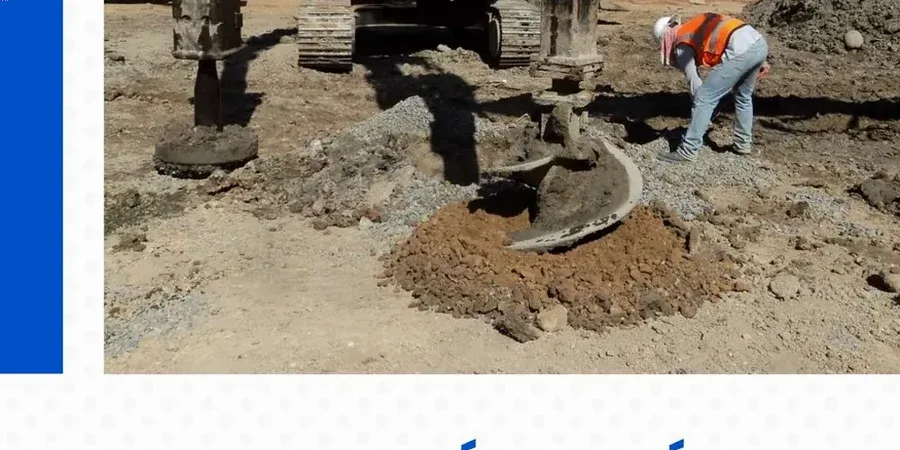
We mobilize a vibroflot rig with a 130-foot mast and a high-pressure water jet system. The setup is loud. It pushes stone into the ground under vibration and air pressure. Without a thorough subsurface investigation first, the risk is real: encountering boulders or buried debris stops the vibroflot cold, breaks the tip, and adds days to the schedule. The biggest design risk is underestimating the lateral extent of the soft zone. A column that terminates in compressible silt instead of bearing on a firmer stratum won't reduce settlement as modeled. We cross-check CPT soundings with SPT drilling data to confirm refusal depth across the entire footprint. Differential settlement between improved and unimproved areas can crack slab-on-grade if the transition isn't detailed properly.
Applicable standards
ASTM D1586 Standard Test Method for Standard Penetration Test (SPT), ASTM D2487 Classification of Soils for Engineering Purposes (USCS), IBC Chapter 18 Soils and Foundations, ASCE 7 Minimum Design Loads for Buildings, ASTM D1194 Standard Test Method for Bearing Capacity of Soil (Plate Load)
Associated technical services
Feasibility and design
We review CPT and SPT logs, run settlement analyses, and produce stamped design drawings with column layout, depth, and stone gradation specifications.
Installation and quality control
Vibro-replacement using wet top-feed method. We monitor amperage, uplift rate, and stone consumption in real time to confirm column continuity.
Post-treatment verification
Plate load tests and cross-hole seismic surveys within the treated zone to measure the actual improvement ratio achieved versus the design target.
Typical parameters
Quick answers
How much does stone column design and installation cost in Spokane?
For a typical residential or light commercial project, the design and installation of a stone column field runs from US$1,610 to US$5,310 depending on the depth to refusal, the number of columns, and access constraints on site.
How long does it take for the ground to consolidate after stone column installation?
It varies with the soil's permeability. In the silty deposits common in the Spokane Valley, we typically observe 80% of primary consolidation within four to six weeks after installation, based on pore pressure dissipation monitored during the job.
Can stone columns eliminate liquefaction risk?
They reduce it significantly. The columns densify the surrounding soil and provide a drainage path for excess pore pressure during a seismic event. For critical structures in high-seismic zones, we often combine them with a structural mat foundation.
What's the difference between stone columns and vibrocompaction?
Vibrocompaction densifies granular soils with little to no fines content. Stone columns are for cohesive, silty, or mixed soils where fines prevent effective densification. The column replaces a volume of soft soil with compacted stone, forming a composite ground mass.