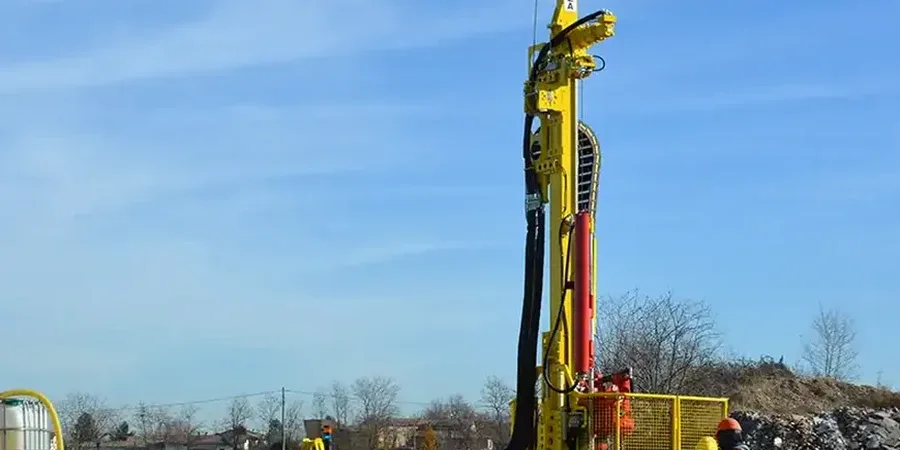
ASTM D1586 governs the Standard Penetration Test, and in Spokane it\u2019s the baseline for nearly every mid-rise, warehouse, and hillside home. The city sits on a mix of Pleistocene outburst flood deposits, basalt bedrock at variable depth, and pockets of compressible silts left by Glacial Lake Columbia. Without solid N-value data, you\u2019re guessing on bearing capacity and settlement \u2013 and Spokane County building officials won\u2019t accept guesses. Our crews run the SPT with a safety hammer and automatic trip, drilling through cobbles and weathered basalt that define much of the Spokane Valley and South Hill subsurface. When the ground gets too stiff for SPT, we pivot to CPT testing for continuous profiling or verify fill compaction with a sand cone density test.
Spokane\u2019s glacial soils can swing from loose silt to basalt in 10 feet. SPT tells you exactly where that transition happens.
How we work
Local ground factors
Spokane River floodplain deposits and Missoula Flood slack-water silts create a real risk: loose, saturated layers that lose strength under seismic loading. The USGS seismic hazard model for Eastern Washington puts Spokane in a moderate shaking zone, and the IBC requires liquefaction evaluation for certain site classes. If you skip the SPT on a commercial build near the river, you can end up with differential settlement that cracks slabs and racking doors within two seasons. We\u2019ve seen it on infill lots in Hillyard where decades of undocumented fill masked compressible organics. A few borings, a proper N-value profile, and the problem is exposed before the concrete goes in. The liquefaction analysis we run from that data tells the structural engineer whether densification or deep foundations are needed.
Applicable standards
ASTM D1586, ASTM D2487, IBC (current adopted edition), ASCE 7, AASHTO T 206
Associated technical services
SPT Borehole Drilling
Hollow-stem auger borings with split-spoon sampling at 5-foot intervals, logged to ASTM D2487. We handle access constraints on tight urban lots.
Liquefaction Screening
Seed-Idriss simplified procedure using SPT blow counts and fines content. Required for IBC Site Class E and F soils near the Spokane River.
Bearing Capacity Reports
Allowable bearing pressure and settlement estimates from N-values, delivered in a sealed report ready for Spokane County plan review.
Groundwater Monitoring
Observation wells installed through the auger string; water levels recorded at 24 and 48 hours to inform dewatering and basement design.
Typical parameters
Quick answers
What does an SPT test cost in Spokane?
For a typical single boring to 30 feet with standard sampling, plan on US$570 \u2013 US$710. Mobilization, traffic control, and deeper borings add cost. We give a fixed quote after reviewing the site address and boring plan.
How long does the fieldwork take?
One boring to 30 feet usually takes half a day. Two to three borings can run a full day, depending on cobble content and groundwater conditions. We typically deliver the boring log within 48 hours of completing the field work.
Do you handle Spokane County permit requirements?
We don\u2019t pull the geotechnical permit directly, but our reports are formatted to meet the Spokane County Building and Planning Department submittal requirements, and we coordinate with your civil engineer to keep the package moving.
What depth do you need to reach for a typical commercial building?
Most commercial footings in Spokane are designed at 4\u20136 feet below grade. We typically drill to 30 feet minimum \u2013 deeper if soft silt or fill is encountered \u2013 so the engineer can evaluate settlement influence down to two times the footing width.
Can you drill through basalt?
Hollow-stem augers stop at competent basalt. When we hit refusal, we log the depth and switch to rock coring if the engineer needs strength parameters. We\u2019ll coordinate that switch on site so you don\u2019t pay for a second mobilization.